
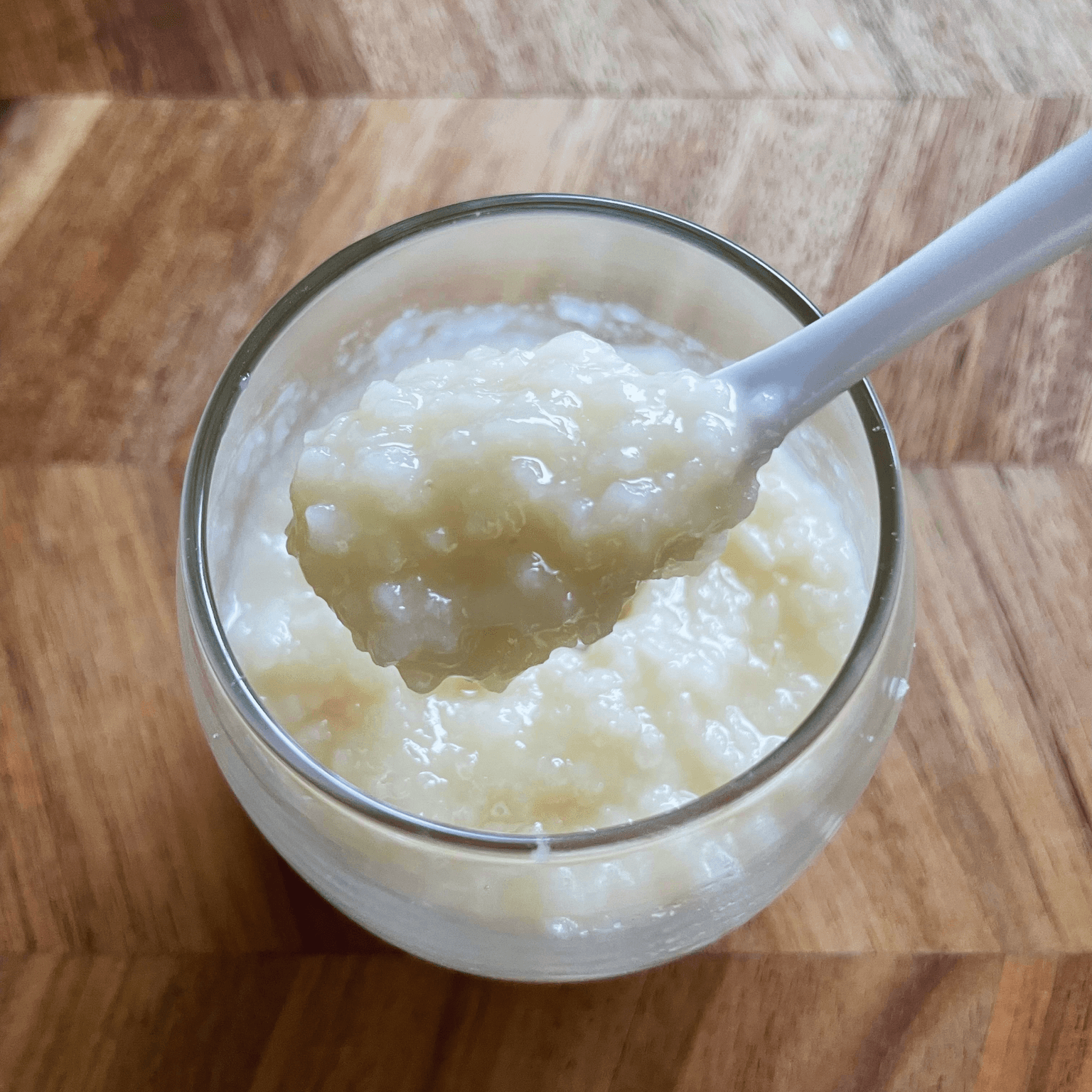
Shio koji is one of the easiest Japanese fermented seasonings to make at home. With just rice koji, salt and water, you can make a versatile seasoning that brings out the natural flavour and umami of ingredients and can help tenderise meat and fish.
Dried rice koji is the most practical option for home cooking and is the type you are most likely to find at Japanese grocery stores in Australia. It is shelf-stable and works well for making shio koji. I made this batch with Miyako Koji, following the official method from Ise Sou, the manufacturer of Miyako Koji.
- 200 g dried rice koji (Miyako Koji)
- 90 g salt (I used Olsson's Sea Salt Flakes from my local grocery store)
- 400 ml water
- A clean container with a lid
- A clean spoon for stirring
- A clean towel for keeping the mixture warm at the beginning
This recipe makes shio koji with a salt concentration of about 13%.
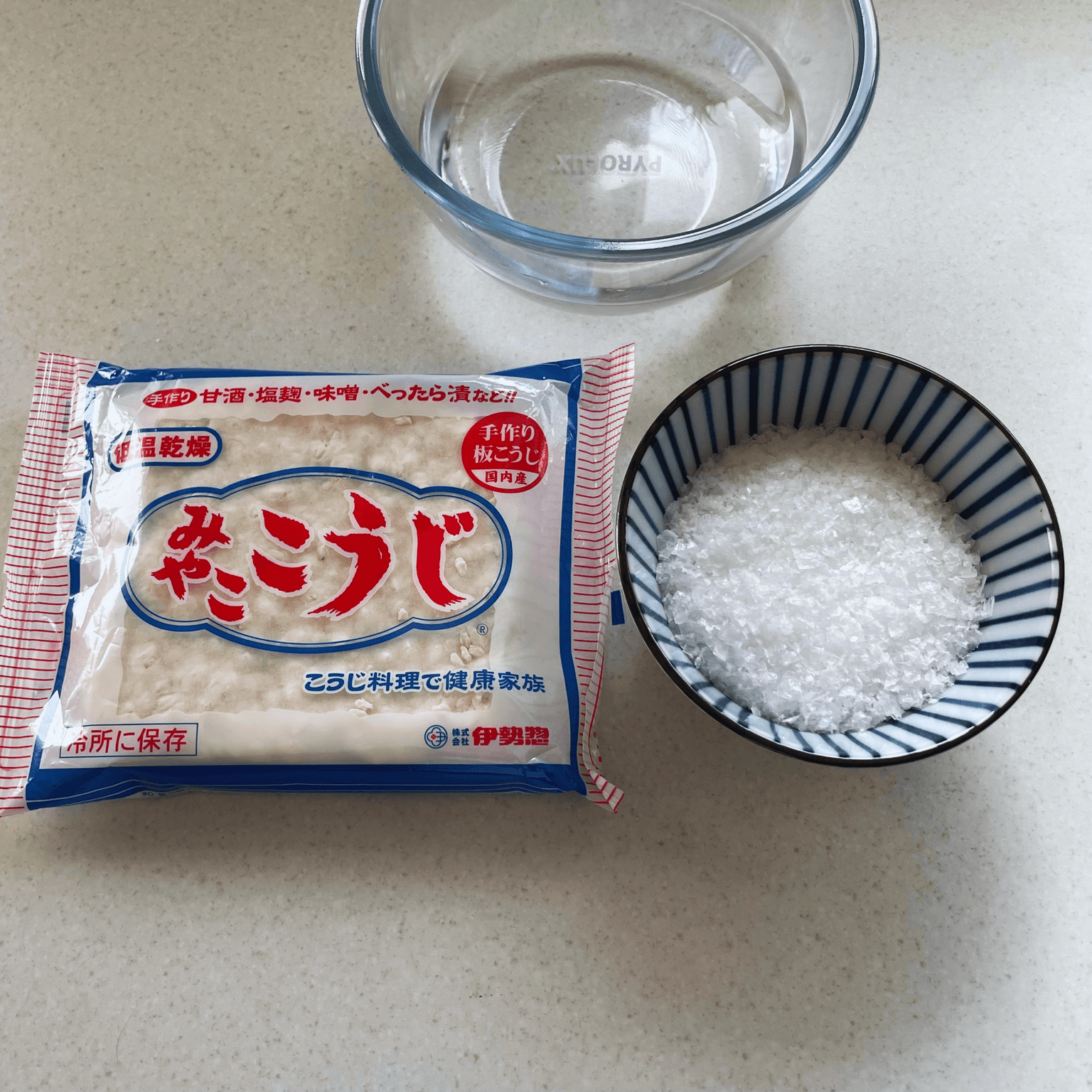
- Bring 400 ml water to the boil. Dissolve the salt in the hot water, then leave it to cool to about 60°C.
- While the salted water is cooling, gently break up the dried rice koji with clean hands.
- Add the rice koji to the salted water and mix well.
- Put the lid on the container, then wrap it in a clean towel and keep it warm for 2 to 3 hours.
- After 2 to 3 hours, remove the towel and leave the mixture to cool naturally to room temperature.
- Stir the mixture once a day and leave it at room temperature for about 1 week.
This is what my shio koji looked like on day 3. The grains had started to soften, but they still had a slightly firm centre.
- After about 1 week, transfer the shio koji to the fridge. Use a clean spoon to take out only what you need each time.
After about 1 week, the koji grains should look plump and feel soft, with no firm centre when pressed with a clean spoon. The mixture may also become slightly thicker, and the grains and liquid will look more blended together.
The aroma can vary. It may smell mildly sweet, rice-like, yeasty or bready. Use the aroma as a supporting sign rather than the main way to judge whether it is ready.
Once the shio koji is ready, keep it in the fridge. Homemade shio koji usually keeps for several months in the fridge if stored in a clean container. Always use a clean spoon, and if it develops an unpleasant smell or visible mould, discard it.
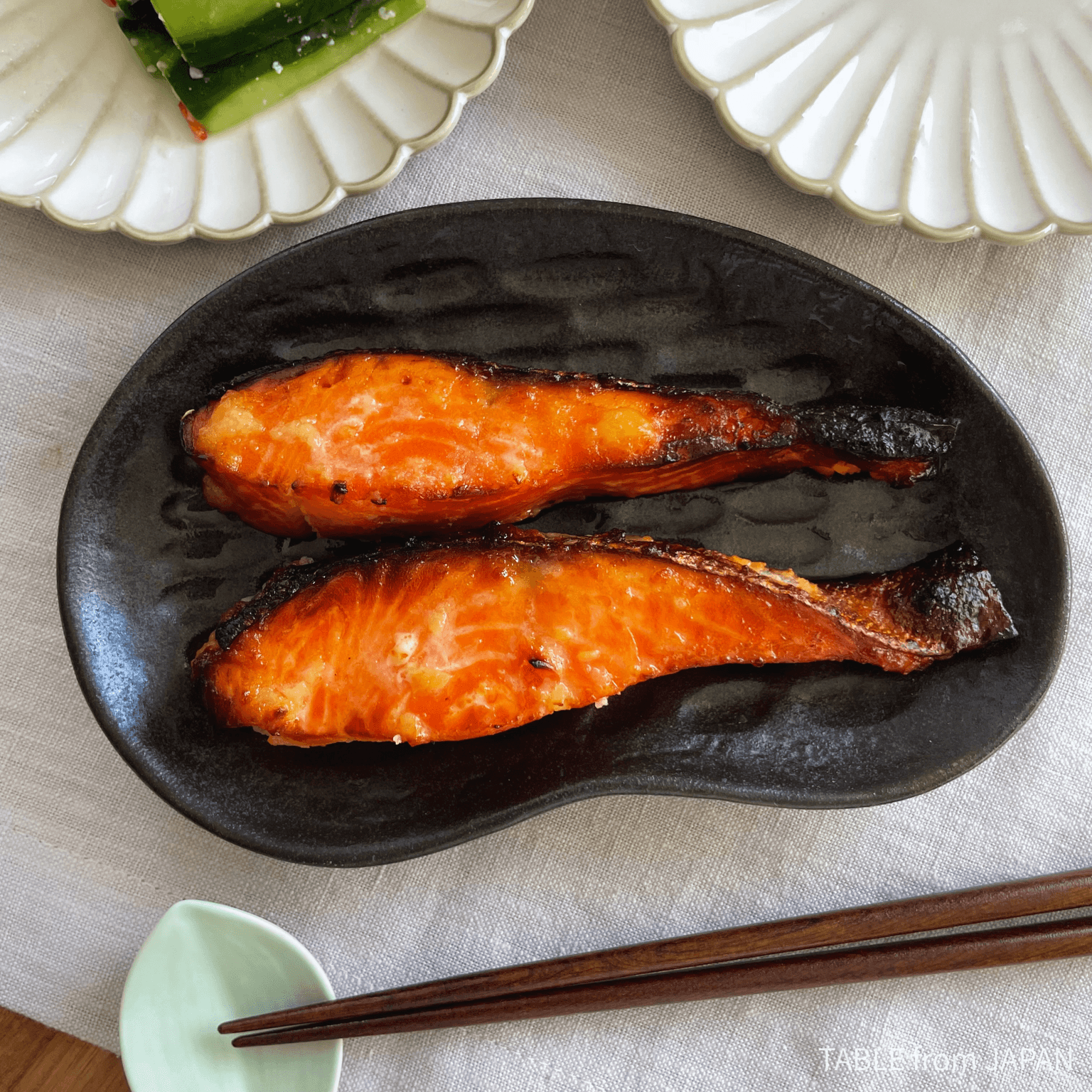
The easiest way to use shio koji is as a marinade. As a simple guide, use about 10% of the ingredient weight. For example, use about 10 g of shio koji for 100 g of chicken, pork, fish or vegetables.
- Chicken: use shio koji equal to about 10% of the chicken's weight. Marinate for at least 30 minutes or overnight, then bake or pan-fry over medium heat.
- Salmon or firm white fish: use shio koji equal to about 10% of the fish's weight. Marinate for about 1 hour, then bake or pan-fry. Check it regularly because shio koji browns quickly.
Shio koji browns quickly, so keep an eye on meat or fish as it cooks. If the surface is browning too quickly in the oven, loosely cover it with aluminium foil and continue baking until cooked through.
Ready-made shio koji is convenient, but I enjoy making it at home because it is simple, economical and gives me a generous batch to keep in the fridge. Once it is there, it becomes one of those seasonings I reach for again and again.
FAQ
What kind of salt should I use?
Plain sea salt works well. I used Olsson's Sea Salt Flakes for this batch.
Can I use another brand of dried rice koji?
Yes, but the recommended amounts of water and salt, as well as the preparation method, can vary by product. This recipe was tested with Miyako Koji using Ise Sou's official method. If you use another brand, follow the instructions on the package.
What should shio koji smell like?
The aroma can vary, but it may smell mildly sweet, rice-like, yeasty or bready. Use the aroma only as a supporting sign and check that the koji grains have softened after about 1 week.
What should I do if mould appears?
If you see visible mould or notice an unpleasant or rotten smell, discard the whole batch. Do not taste shio koji if you are unsure whether it is safe.
Does homemade shio koji need to be refrigerated?
Keep it at room temperature while it ferments according to this method. Once it is ready, store it in the fridge and use a clean spoon each time.
Can I blend shio koji?
Yes. Once the shio koji is ready, you can blend it if you prefer a smoother texture. Use clean equipment and return it to the fridge after blending.
Why does my shio koji still look watery?
It can look quite loose at the beginning. As you stir it each day, the koji grains soften and the liquid and grains gradually become more blended together. Follow the water amount recommended for the brand of koji you are using.
How long does homemade shio koji keep?
It usually keeps for several months in the fridge.