
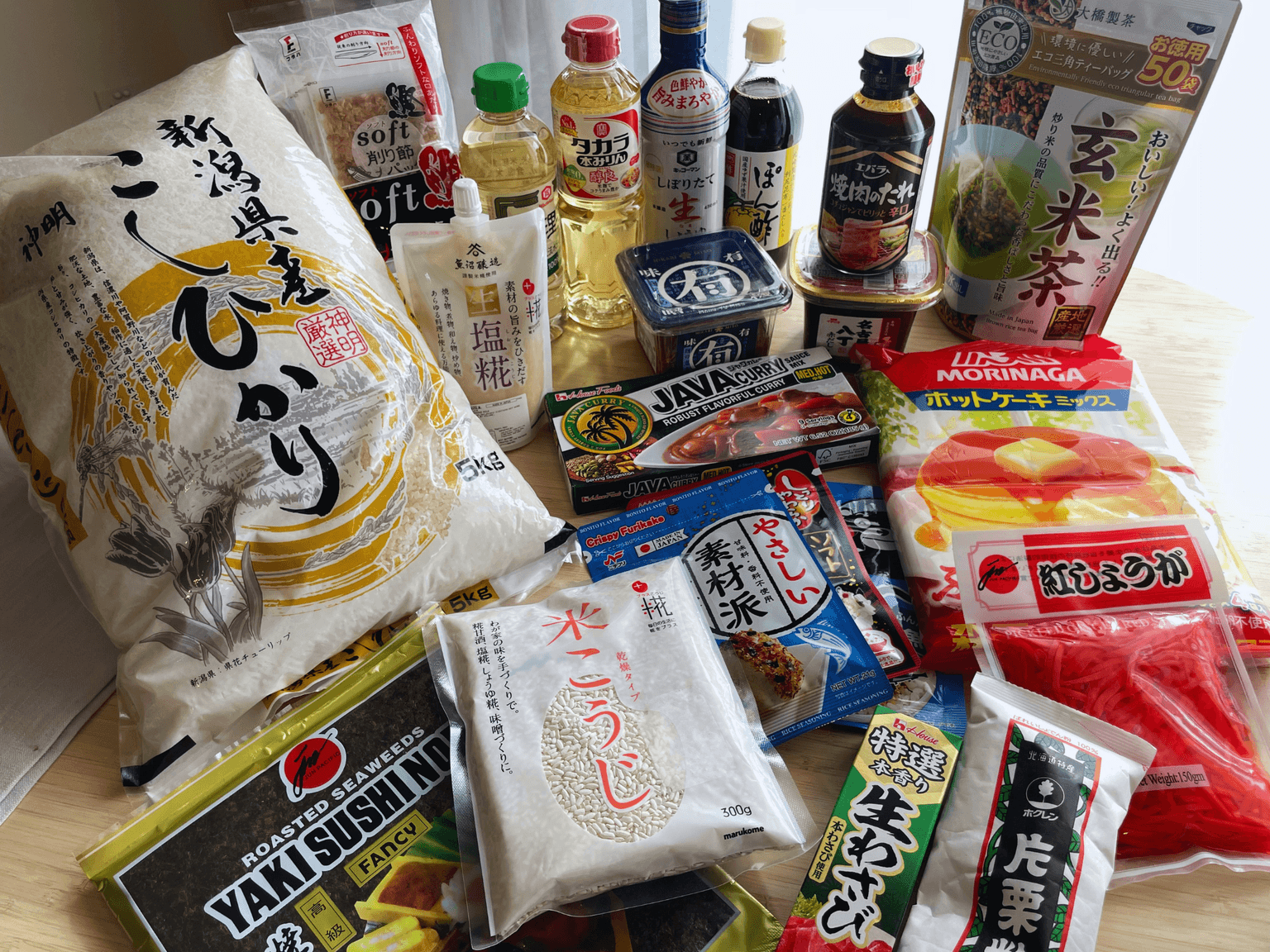
We had run out of Japanese rice at home, so I went to Fuji Mart to restock. A trip to a Japanese grocery store is always a little exciting for me, even when I'm only going for the basics. As usual, I came home with a few extra things.
- Japanese rice — 5 kg bag of Niigata Koshihikari
- Soy sauce — Kikkoman Shiboritate Nama Soy Sauce
- Cooking sake
- Mirin — Takara Hon Mirin
- Ponzu — a citrusy soy-based sauce for dipping and dressings
- Yakiniku sauce — Ebara Japanese BBQ Sauce
- Miso
- Shio koji — a fermented seasoning for marinades and everyday cooking
- Dried rice koji — for making homemade shio koji or shoyu koji
- Katsuobushi — soft dried bonito flakes used as a topping to add savoury flavour
- Wasabi — Nama wasabi paste
- Sushi nori — roasted seaweed sheets for sushi rolls and onigiri
- Furikake — a seasoning sprinkled over rice
- Beni shoga — pickled red ginger served with dishes such as gyudon and yakisoba
- Katakuriko — potato starch used for thickening sauces and coating fried foods
- Japanese curry roux — Java Curry (Medium Hot)
- Japanese pancake mix — Morinaga Hotcake Mix
- Genmaicha tea bags — green tea blended with roasted brown rice
The largest item was a 5 kg bag of Niigata Koshihikari rice. Rice is at the centre of many of our meals, so I usually buy it in a larger bag.
Once I get home, the full 5 kg bag fits neatly into the rice storage container I keep in the fridge, which makes it easy to store.
Although Australian supermarkets now stock more Japanese ingredients than they used to, I still prefer to buy our rice from a Japanese grocery store, where I can find the Japanese varieties and larger bags we use at home. It is usually what prompts my next trip to a Japanese grocer—I go when we are running low or have run out.
Furikake is something I always like to keep at home because my children love it, especially the bonito flavour. That is the one they eat most often. When they are not very interested in plain rice, sprinkling a little furikake over the top often helps. It is also very handy for lunchboxes and making onigiri.
I also bought soft katsuobushi. It is handy as a topping for okonomiyaki and many other dishes, adding extra savoury flavour.
I also bought beni shoga, the pickled red ginger often served with dishes such as gyudon and yakisoba. For me, gyudon just isn't complete without it.
I also restocked three Japanese pantry staples: soy sauce, cooking sake and mirin. I can find all three at Australian supermarkets, and I sometimes buy them there if I run out between trips to a Japanese grocery store. When it comes to mirin, though, I specifically look for hon mirin, so it is something I make sure to pick up when I visit a Japanese grocery store. I use these seasonings regularly in dishes such as teriyaki, simmered dishes and marinades.
Mirin guide · Japanese cooking sake guide
Yakiniku sauce is delicious as a dipping sauce for barbecued meat, and I also often add a small amount to my karaage marinade for extra flavour.
For wasabi, I usually choose a nama wasabi paste like this one.
I also bought miso, ready-made shio koji and dried rice koji. I use miso for much more than miso soup, and I usually keep a couple of varieties at home, such as white and red miso, so I can enjoy their different flavours.
Ready-made shio koji in a pouch is convenient because I can simply pour it over ingredients as a marinade. I often use it for salmon before grilling or baking.
I bought the dried rice koji to make another batch of homemade shio koji, and I would also like to try making shoyu koji.
Miso guide · How to make shio koji · Shio koji salmon recipe
Japanese pancake mix is one of the pantry items I love to keep at home. It is so convenient—you only need to add simple ingredients such as an egg plus milk or water to make soft, delicious pancakes. My children always look forward to the occasional pancake breakfast.
I'll probably come home with a few different things next time, but these are the ingredients I almost always keep in my pantry. If something here interests you, try starting with one or two items that suit the way you cook. You can always add more as you discover new recipes. If you are looking for any of these ingredients, my Japanese grocery shop list by city may help you find a store nearby.
- Tomoka
Browse some of the kitchen and pantry items I use at home.