
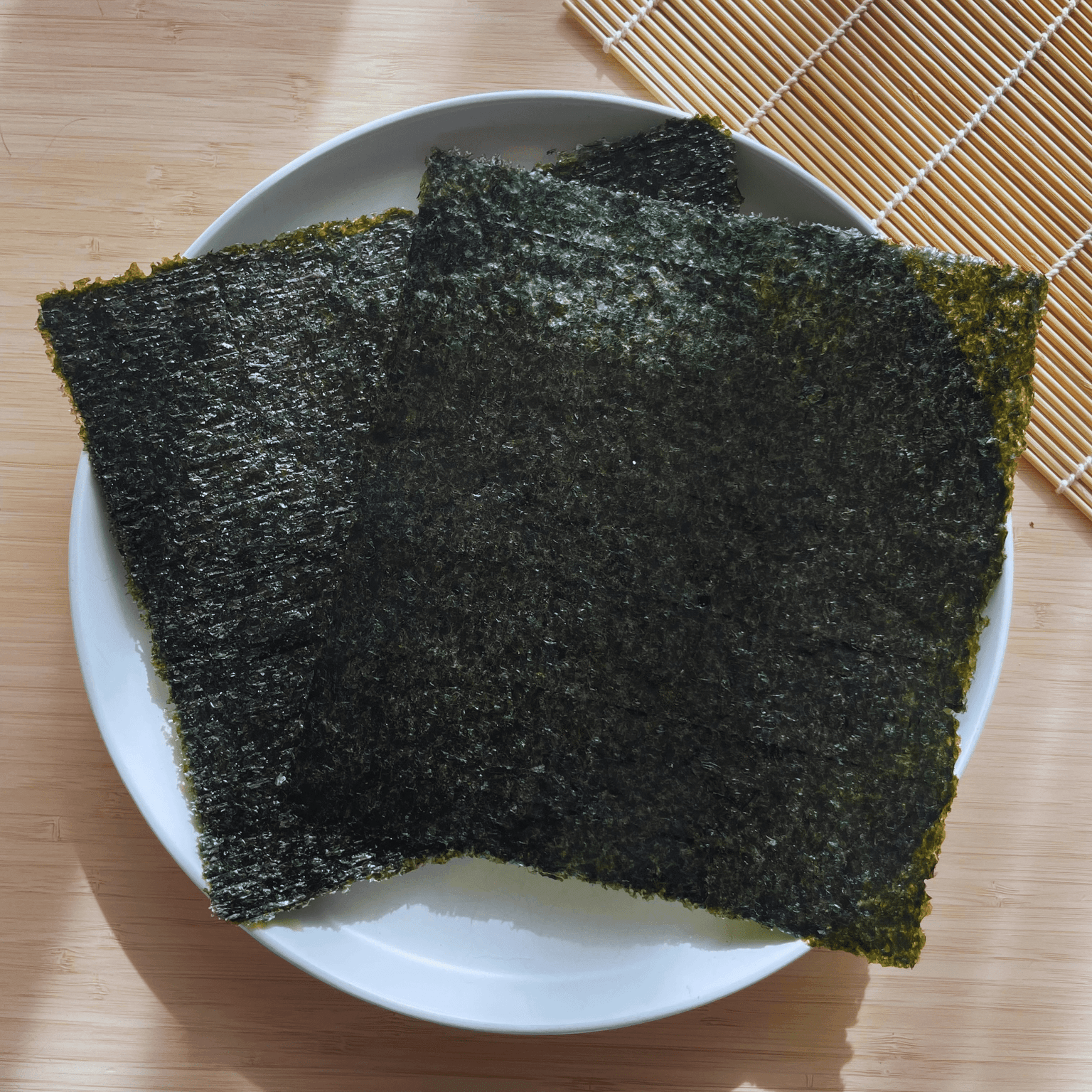
A sheet of sushi nori looks simple, but it quietly has a front and a back. Once you know which side is which, onigiri, sushi rolls and onigirazu become a little easier to wrap neatly.
The shiny, smoother side is usually treated as the front of the nori. The slightly rough side is the back. When wrapping rice, place the rice against the rough side and keep the shiny side facing out.
In Japanese, the shiny side is called omote, or front, and the rough side is called ura, or back. You do not need to remember these Japanese words, but the idea is useful.
The rough side has more texture. It absorbs a little moisture from the rice, which helps the nori stick neatly.
This becomes especially helpful with onigiri for lunchboxes, children, or any meal where you want the rice and nori to stay together until the last bite.
I noticed this clearly when my four-year-old daughter tried an onigiri wrapped the other way around. The nori was harder for her to bite through, and the rice started to fall apart more easily.
The rule is the same for onigiri, sushi rolls and onigirazu: rice goes on the rough side, and the shiny side faces out.
If the rice is freshly cooked and still very hot, let it cool slightly before wrapping. Too much steam can make nori soften quickly.
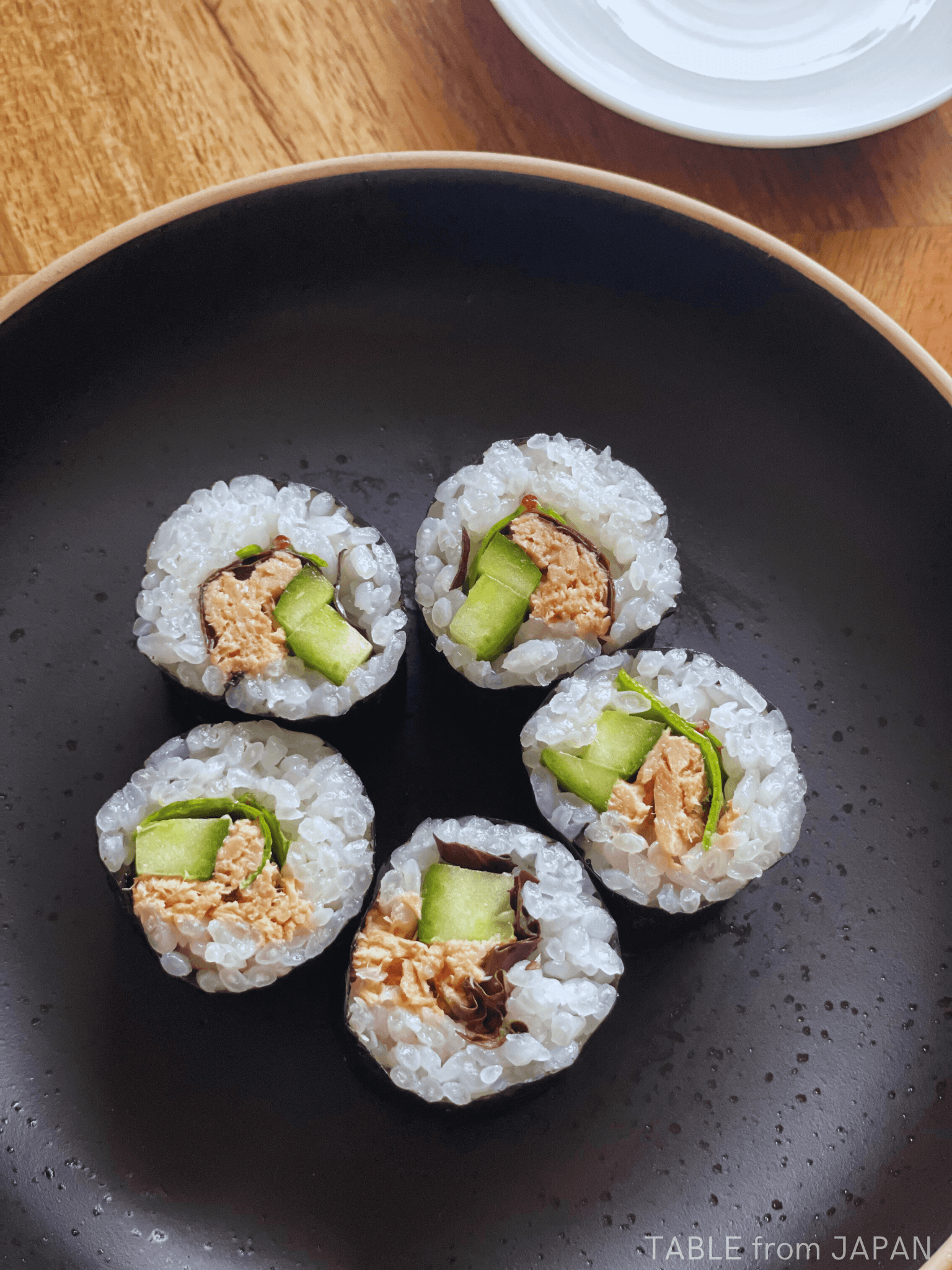
Tuna Mayo Sushi Roll
In Australia, nori can soften quickly if the weather is humid or the packet has been open for a while. After opening, press the seal closed tightly on the resealable packet. If it does not close well, move the sheets to a zip-top bag or airtight container. If the packet includes a small desiccant sachet, keep it inside but away from children.
Sushi nori from Woolworths, Coles, IGA or local grocery stores works well for home cooking. Look for plain sushi nori sheets, not seasoned snack seaweed.
Next time you open a packet of nori, take a second to look at both sides. Shiny side out, rough side to the rice. It is a tiny habit, but it can make your onigiri and sushi rolls feel much more comfortable to make.
- Tomoka